
Home / Fire Damage Restoration / Hunters Ridge
Fire Damage Restoration Help for Hunters Ridge Residents
A residential fire can leave more than visible burn marks behind. Smoke may move into other rooms, soot can settle on household belongings, and water used during firefighting may affect walls, floors, and ceilings. Property owners seeking Fire Damage Restoration Hunters Ridge Grapevine help need to understand what happened before deciding what should be cleaned, documented, or replaced. Valor Fire Damage Restoration Grapevine connects property owners with independent restoration providers to explore available recovery options.
Understanding Fire Damage in Hunters Ridge
After a fire, the condition of a property may be different from what its visible damage suggests. A burned kitchen, for example, may have affected nearby rooms through smoke movement, while firefighting water may have introduced moisture into materials that were not directly exposed to flames.
Homeowners exploring fire damage restoration in Hunters Ridge Grapevine TX may need to consider several types of damage together:
Understanding these differences can help homeowners ask more specific questions when discussing restoration options with an independent provider.
Fire and heat damage
Materials close to the fire may show charring, discoloration, or physical deterioration.
Smoke damage
Smoke can move beyond the room where a fire started and leave residue on surfaces and belongings.
Soot contamination
Dark deposits may appear on walls, ceilings, furniture, and other household items.
Smoke odor
Odors may remain in affected materials even after visible residue has been removed.
Water damage after firefighting
Water may affect flooring, drywall, insulation, ceilings, and other building materials.
Fire Damage Restoration and Cleanup Options in Hunters Ridge
Hunters Ridge fire restoration needs depend on the extent and type of damage present. A small fire may leave localized heat damage but widespread smoke residue. A more extensive incident may involve structural damage, contents loss, water intrusion, and repair planning.
Fire Damage Cleanup and Damaged Materials
Fire damage cleanup Hunters Ridge concerns can involve burned debris, affected building materials, and surfaces that require careful evaluation.
Drywall, insulation, flooring, wood framing, cabinetry, and ceiling materials may respond differently to heat and contamination. Whether a material can be cleaned, repaired, or needs replacement depends on its condition and the findings of a qualified professional.
Property owners should avoid removing damaged materials without considering safety, documentation, and the overall scope of the loss. Premature removal may make it harder to document what was affected.
Smoke Damage Beyond the Fire’s Starting Point
Smoke damage restoration Hunters Ridge may involve areas that appear relatively unaffected by direct flames.
Smoke can travel through openings, interior spaces, and, where relevant, HVAC pathways. Residue may settle on painted surfaces, furniture, textiles, and other contents.
The extent of smoke damage is not always clear from a quick visual inspection. Different surfaces and materials may require different cleaning methods, so a restoration provider should explain how affected areas will be evaluated.
Soot Cleanup and Smoke Odor Concerns
Soot cleanup near Hunters Ridge may involve deposits on walls, ceilings, flooring, cabinets, furniture, and personal belongings.
Soot is not simply ordinary household dust. The appropriate cleaning approach depends on the residue and the surface involved. Using unsuitable household cleaners or aggressively wiping contaminated surfaces may spread residue or affect finishes.
Smoke odor can also remain after visible soot has been removed. Odor treatment should be considered alongside the identification and cleaning of affected materials rather than as a substitute for addressing the underlying residue.
Water Damage After a House Fire
Fire suppression can introduce additional water into a property. Water may travel into lower levels, flooring, wall cavities, ceilings, and insulation, depending on the building layout and firefighting activity.
Homeowners looking into how to handle water damage after a house fire should understand that fire and water damage may need to be assessed together.
A qualified restoration provider may use moisture assessment methods to determine which materials are affected and whether drying or removal is appropriate.
Potential concerns include:
- Moisture in drywall and insulation.
- Wet flooring and subfloor materials.
- Water accumulation below damaged ceilings.
- Moisture affecting furniture and personal belongings.
- Materials that may require drying, cleaning, removal, or repair.
Do not assume that a material is dry simply because its surface feels dry. Hidden moisture may require further evaluation.
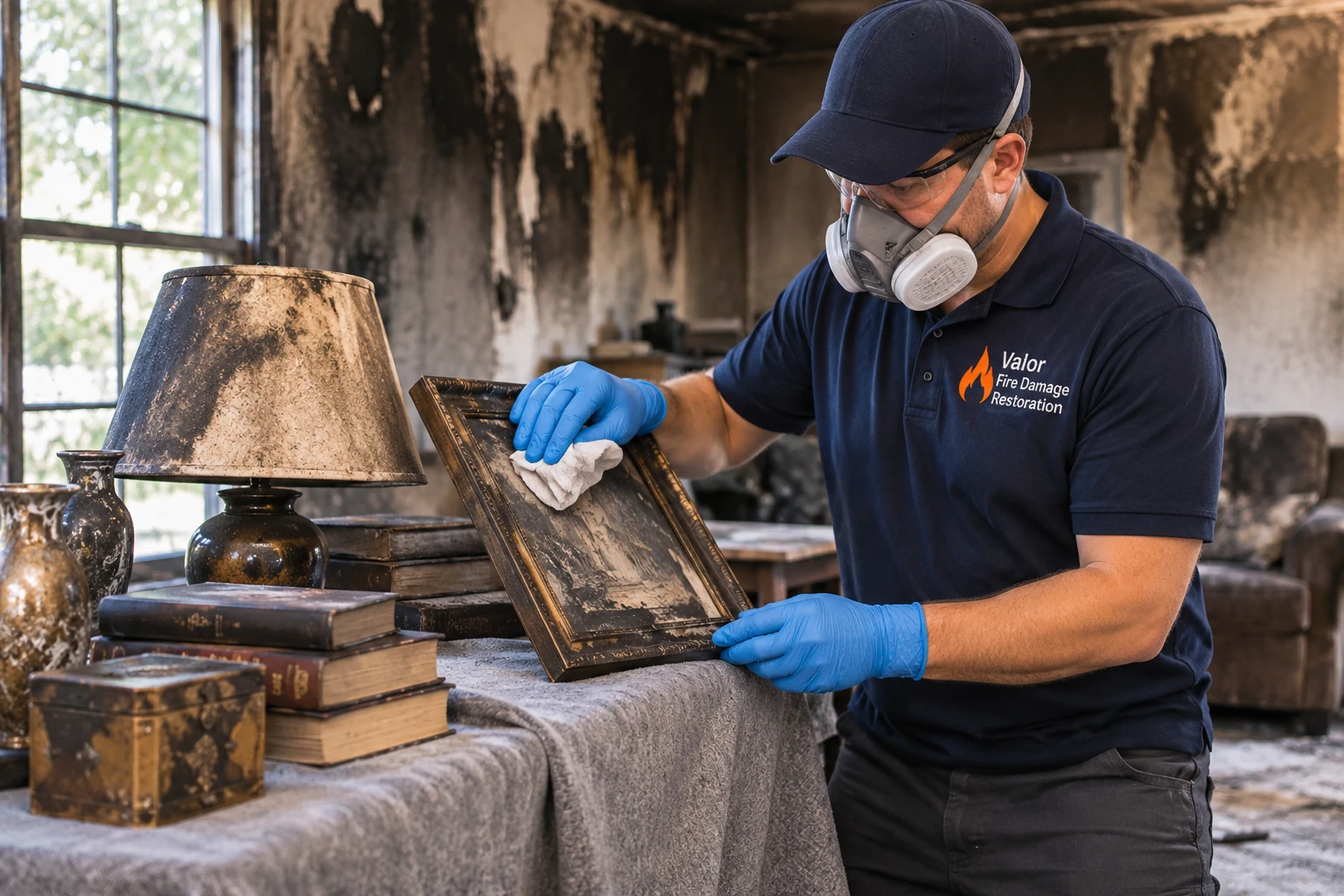
Contents Cleaning and Restoration for Household Belongings
A fire can affect personal property even when the flames do not directly reach it. Smoke, soot, heat, and water may impact furniture, clothing, documents, electronics, and other household contents.
During residential fire cleanup Grapevine planning, belongings may need to be evaluated individually.
What Happens to Furniture and Personal Items?
The condition of an item, the type of material, and the extent of contamination can influence whether cleaning or restoration is practical.
Some items may be suitable for specialized cleaning. Others may require additional evaluation, storage, or replacement consideration.
A contents inventory can help property owners keep track of affected belongings. Depending on the situation, a provider may discuss contents cleaning, packout, or storage options.
Restoration is not guaranteed for every item. A qualified provider should explain the limitations and expected scope before work proceeds.
What to Document After a Residential Fire
Documentation can help homeowners maintain a clearer record of the damage and support discussions with an insurance company.
Once emergency officials have confirmed that it is safe to access the property, consider organizing the following information:
Property Damage Photographs
Photograph affected rooms, walls, ceilings, floors, and belongings. Include both wider views and closer photographs of visible damage.
Damaged Belongings Inventory
Prepare a list of affected furniture, clothing, appliances, electronics, documents, and other personal property.
Available Fire Incident Information
Keep any relevant fire department documentation, incident information, and records provided after the event.
Temporary Repair Records
If temporary repairs are authorized and appropriate, retain relevant receipts and records.
Provider Estimates and Communications
Keep copies of written estimates, proposed scopes of work, and important communications.
The American Red Cross recommends taking photographs of property damage and keeping records of temporary repairs. Insurance requirements vary, so homeowners should confirm documentation expectations with their own insurance carrier.
How the Fire Damage Assessment and Restoration Process Works
The restoration process depends on the property’s actual condition. The following stages describe a general sequence that may be involved when a property owner works with an independent restoration provider.
1. Understand the Damage Situation
The property owner explains what happened, the location of the fire, visible damage, and whether firefighting water entered the property.
2. Connect With an Independent Restoration Provider
Valor connects property owners with independent restoration providers to explore potential options. The selected provider is responsible for confirming its services, qualifications, and availability.
3. Property Assessment and Documentation
The provider evaluates the affected property, identifies damage concerns, and explains the proposed scope of work.
4. Cleanup and Contents Options
Depending on the findings, the provider may discuss smoke and soot cleaning, debris removal, contents evaluation, odor treatment, or water-related mitigation.
5. Repair or Reconstruction Planning
Where building materials or structural elements are damaged, repair or reconstruction may need to be considered separately from initial cleanup.
6. Review the Proposed Work
Property owners should understand what is included, which materials are affected, and what remains outside the proposed scope.
The selected independent provider is responsible for carrying out and explaining the work it agrees to perform.
How to Choose a Fire Restoration Provider Near Hunters Ridge
Finding suitable fire restoration help Hunters Ridge residents can evaluate requires more than comparing a few service descriptions.
Before selecting a provider, consider asking:
The answers may help you compare available restoration options more clearly.
- Does the provider have experience with the type of fire damage affecting my property?
- Which areas and materials are included in the proposed scope?
- How will smoke, soot, odor, and firefighting water damage be evaluated?
- Which belongings may be suitable for cleaning or restoration?
- What qualifications are relevant to the proposed work?
- Can I receive a written estimate and explanation of the recommended work?
- How will photographs, inventory records, and progress updates be handled?
- Which repairs or reconstruction services are included, if any?
- What should I confirm with my insurance company before proceeding?
How Valor Fire Damage Restoration Grapevine Helps
Valor Fire Damage Restoration Grapevine is a connection service that helps property owners explore independent fire damage restoration provider options.
The purpose is to help property owners understand their next steps without making unsupported promises about restoration outcomes.
Valor does not automatically represent the selected provider as its employee or in-house restoration team. The independent provider is responsible for confirming its qualifications, services, pricing, availability, timelines, and work.
If a fire has affected your Hunters Ridge property, you can contact Valor to discuss the situation and explore potential provider options.
Fire Damage Restoration in Hunters Ridge, Grapevine, TX
Hunters Ridge is identified as a neighborhood within Grapevine, Texas. For homeowners dealing with a residential fire, the immediate concern is often understanding the condition of the property and the decisions that may follow.
A property loss can involve direct fire damage, smoke migration, soot deposits, odor, water from firefighting, and damage to household contents. These concerns should be evaluated according to the actual conditions of the property.
Property owners in Hunters Ridge can use the information on this page to understand common post-fire concerns, prepare documentation, and evaluate independent restoration provider options within the broader Grapevine area.
Frequently Asked Questions
Quick answers for Hunters Ridge homeowners dealing with fire, smoke, soot or firefighting water damage.
First, prioritize the safety of everyone in the household. Follow instructions from emergency officials and do not return to a fire-damaged property until it has been cleared for entry. Once access is permitted, homeowners can begin documenting visible damage, keeping relevant records, and discussing restoration options with qualified professionals.
Yes. Smoke may move into other rooms through openings and interior pathways. Soot and smoke residue can affect walls, ceilings, furniture, textiles, and other contents outside the fire’s immediate location. The extent of contamination depends on the incident and the property.
Visible dark residue, discoloration, or smoke odor may indicate that belongings have been affected. However, the absence of obvious residue does not necessarily establish that an item is unaffected. A qualified provider can evaluate the item and explain suitable cleaning or restoration options.
Firefighting water may enter flooring, walls, ceilings, insulation, and personal belongings. The affected materials may require moisture assessment, drying, cleaning, removal, or repair. The appropriate response depends on how much water entered the property and which materials were affected.
Not automatically. Safety concerns must come first, but property owners should also consider damage documentation and the proposed scope of work. Damaged materials should be evaluated by qualified professionals before decisions about removal or repair are made.
Residents can explore independent restoration provider options serving the broader Grapevine area. When comparing providers, consider their relevant experience, qualifications, written estimates, proposed scope, documentation practices, and confirmed availability.
Photographs should show affected rooms, visible burn damage, smoke and soot residue, damaged belongings, water-related damage, and relevant building materials. Wider room photographs and closer views can provide different levels of detail. Take photographs only when it is safe to access the property.
Yes. Smoke odor may remain in affected materials or belongings after visible residue has been removed. The appropriate treatment depends on the source of the odor, the materials involved, and the extent of contamination. Odor treatment should be considered alongside appropriate cleaning and assessment.
Explore Fire Damage Restoration Options for Hunters Ridge
If your home has experienced fire, smoke, soot, or water damage, understanding the next steps can help you make more informed decisions.
Valor Fire Damage Restoration Grapevine connects property owners with independent restoration providers so they can explore available options.
Discuss your property damage concerns and learn more about potential restoration provider options for Hunters Ridge and the broader Grapevine area.