
Structural Fire Damage Repair in Grapevine, TX
After a fire, a building may look stable while important parts of its structure have been affected by heat, flames, or firefighting water. Damaged roof supports, wall framing, and floor joists can raise questions that cleaning and cosmetic repairs cannot answer. If your property has suffered fire damage in Grapevine, TX, the first step is to understand which areas need professional assessment and what repairs may be required. Valor connects property owners with independent restoration providers to help them explore their options.
Valor connects property owners with independent restoration providers. Structural inspections, engineering and repair work are performed by appropriately qualified independent professionals.
What Counts as Structural Fire Damage?
Structural fire damage affects the components that support a building or help maintain its stability. These may include wood studs, load-bearing walls, beams, posts, roof trusses, rafters, floor joists and structural connections. Fire can also damage roof decking, wall sheathing and other materials that form part of a building assembly.
The extent of the damage depends on the materials, the heat exposure, how long the fire burned and the condition of the affected components. Firefighting water can create additional concerns for some building materials. A proper assessment looks at the building as a whole, rather than judging its condition from the most visibly burned room alone.
Why a Building Needs More Than a Visual Check After a Fire
A blackened wall is an obvious sign of fire damage, but visible marks do not reliably show how much strength a structural component has retained. Timber may have charred, connections may have been affected, or damage may extend behind drywall and insulation. Roof spaces and wall cavities can also contain materials that need closer examination.
A building that appears undamaged from the outside may still need professional assessment. The reverse is also true: dark staining does not automatically mean every affected structural member must be replaced. The right decision depends on the actual condition of the materials and the findings of qualified professionals.
Warning Signs That Need Professional Attention
Charred or deeply burned wood framing
Sagging or visibly distorted roof components
Cracked, displaced or damaged structural elements
Floors or ceilings that have changed shape
Fire damage around beams, posts or load-bearing walls
Damaged connections between roof, wall or floor components
Water exposure around areas affected by the fire
These signs cannot establish whether a building is safe. If structural instability is suspected, do not enter the affected area or attempt to test it yourself. Follow instructions from emergency officials and the relevant building authorities.
Can Fire-Damaged Wood Framing Be Repaired?
Sometimes, but the decision depends on the damage and the role of the framing. Light surface discoloration and deep charring are not the same thing. The depth of damage, remaining material, structural function and condition of the connections all matter.
A qualified professional may recommend retaining an affected member, repairing a limited section, reinforcing it through an accepted method or replacing it. Engineering input may be necessary when the damage involves important load-bearing elements or when the condition cannot be established through a routine inspection.
Property owners should ask for the reason behind each recommendation. A clear explanation helps distinguish work needed to address documented damage from optional improvements or finish upgrades. It also helps you compare repair proposals without assuming that the cheapest estimate or the most extensive replacement plan is automatically the right choice.
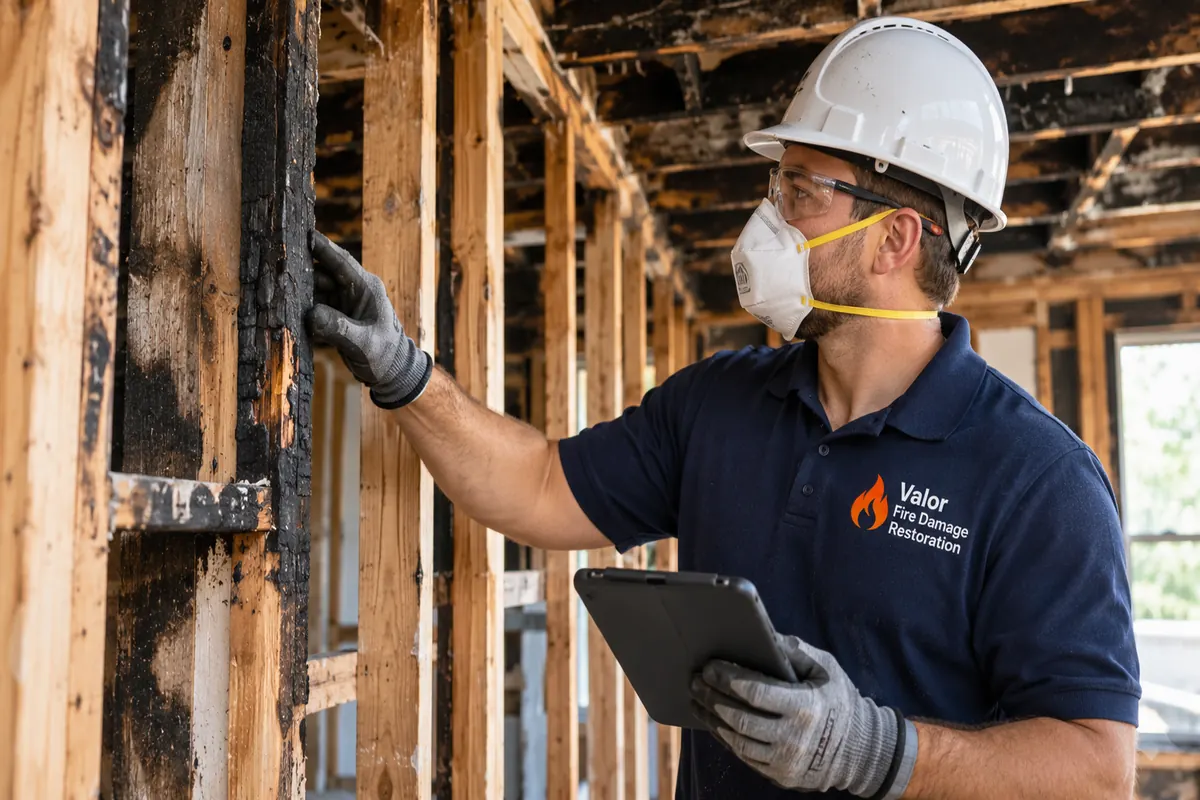
Repair or Replace? How the Decision Is Made
The decision to repair or replace fire-damaged structural materials should be based on evidence, not appearance alone. Different components perform different jobs, so a repair method that may be suitable for one section of framing may not be suitable for a beam, roof truss or load-bearing wall.
When Repair May Be an Option
Repair may be considered when an assessment finds that the affected component can remain in service and an appropriate method can address the damage. Depending on the situation, this could involve a localized repair or an approved reinforcement method. The proposed approach should account for the component’s function and any applicable engineering or building requirements.
When Replacement May Be Recommended
Replacement may be needed when the damage has compromised the component beyond an acceptable repair method. Significant material loss, damaged structural connections or findings from an engineering assessment may affect the decision. The scope may cover one section or a larger assembly, depending on what the assessment identifies.
What Should Be Included in the Decision?
Ask the professional assessing your property to explain:
- Which components are damaged and how that was established
- Whether concealed areas need to be opened for assessment
- Why repair, reinforcement or replacement is recommended
- Whether an engineer needs to review the affected structure
- Which permits or inspections may apply
- How the completed work will be documented
A useful rule for property owners: ask for a component-by-component explanation rather than accepting a general statement that the building needs “structural repairs.”
Structural Areas That May Need Repair
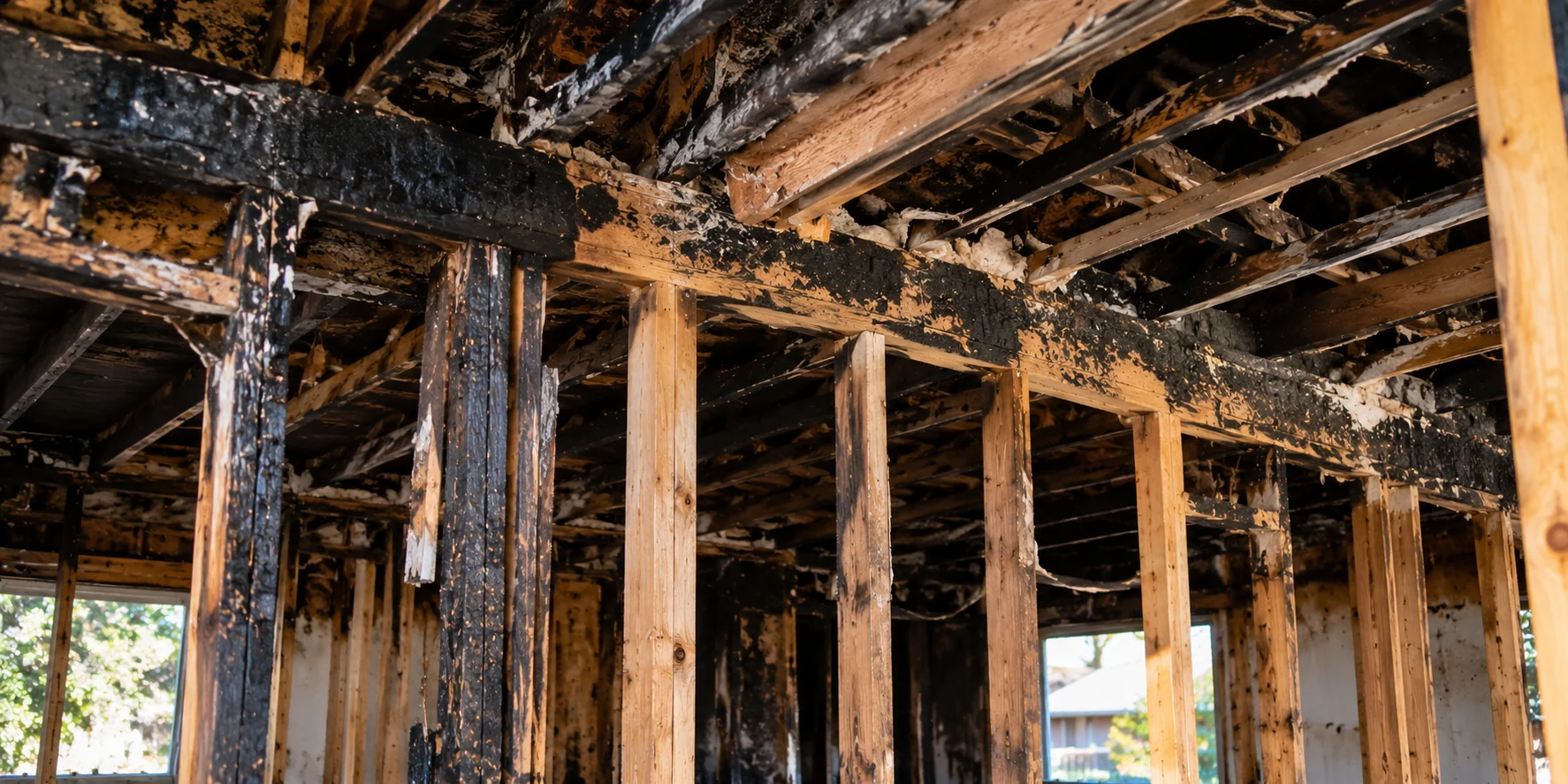
Roof Trusses, Rafters and Roof Decking
Roof framing carries loads across the building and connects with other structural components. Fire can affect trusses, rafters, decking and their connections. The visible damage to roofing materials may not show the full condition of the supporting frame.
Before roof repairs begin, the relevant professional should establish the extent of the damage and determine whether temporary stabilisation or other safety measures are necessary. The repair scope should identify which components need attention and whether adjoining roof areas require assessment.
Beams, Posts and Load-Bearing Walls
Beams, posts and load-bearing walls help transfer loads through a building. Damage to one of these elements can affect connected areas, so the assessment should consider how the component functions within the wider structure.
Do not cut, remove or alter a damaged beam, post or load-bearing wall as part of an informal cleanup. Ask the professional responsible for the assessment whether engineering input is required and how any proposed repair will address the component’s structural role.
Wall Framing, Sheathing and Insulation
Fire may affect wall studs, plates, sheathing and insulation. Some damage remains hidden behind finished surfaces, while soot and smoke residue may affect nearby materials. Replacing the visible drywall alone may not address damage behind it.
The appropriate scope depends on the materials and the extent of the fire exposure. Where inspection requires opening a wall, ask how the findings will be recorded and how the repair plan will account for the materials that remain in place.
Floor Joists and Subflooring
Fire, heat and firefighting water can affect floors and the materials supporting them. A changed floor surface, visible charring or damage near a fire-affected room may call for closer assessment. However, a floor’s appearance cannot reliably establish the condition of concealed joists or connections.
Before damaged flooring is rebuilt, the relevant professional should determine whether the supporting assembly needs repair or replacement. This helps reduce the risk of completing surface work before the underlying damage has been addressed.
Connected Building Systems
Fire-damaged areas may also contain affected wiring, plumbing, HVAC components or insulation. These systems are different from the building’s structural frame, but they can influence the repair sequence and the work needed before walls and ceilings are closed.
Ask which specialist assessments are required and whether the proposed scope includes the affected systems. Structural repairs should be coordinated with the other necessary work rather than treated as an isolated task.
What Should Happen Before Structural Reconstruction?
Reconstruction should begin only after the required assessments, safety measures and repair scope have been addressed. The exact steps depend on the building and the severity of the fire, but the following questions can help property owners understand the process.
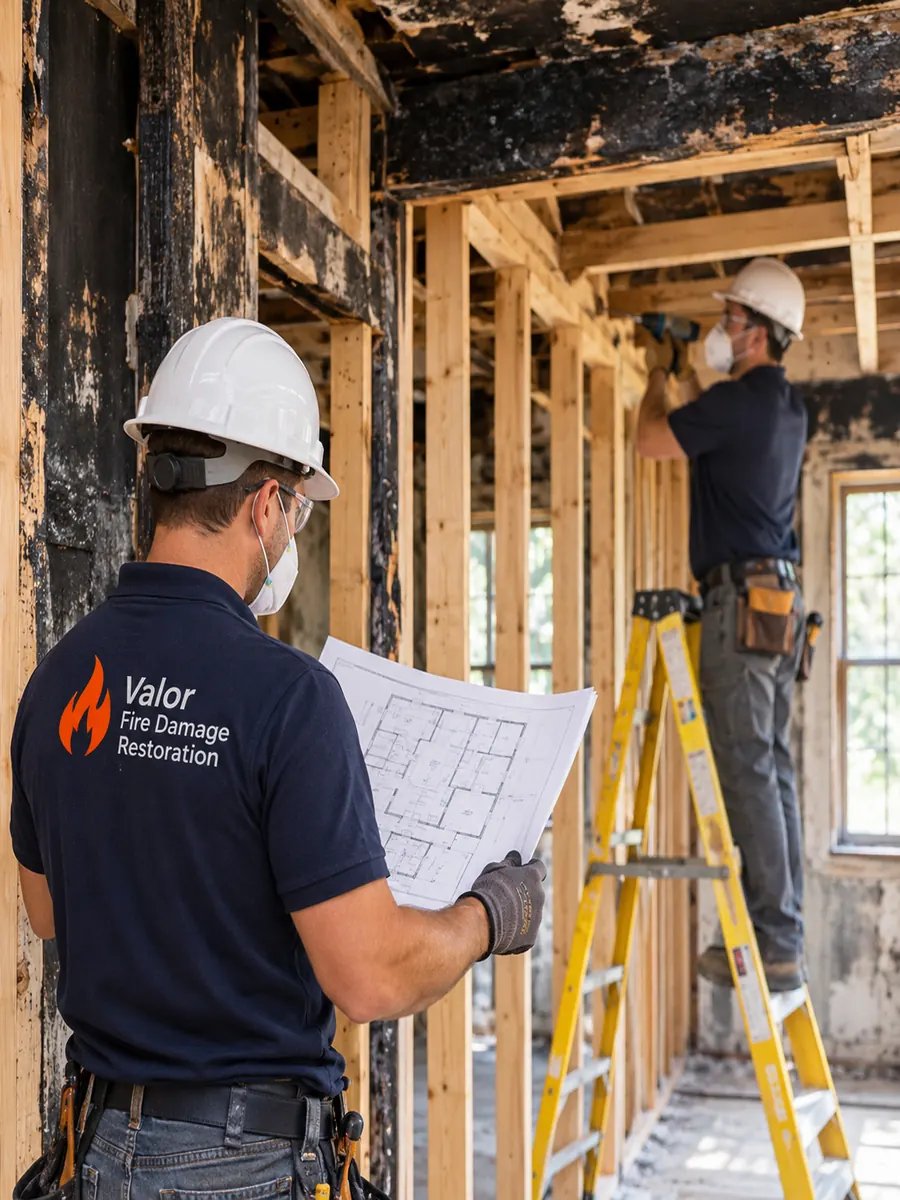
Confirm Safe Access
Follow instructions from emergency officials and building authorities. Do not enter a restricted building or assume that a fire-damaged area is safe because the flames have been extinguished. Temporary support or other safety measures may be required before certain work can proceed.
Identify the Extent of the Damage
The appropriate professional assesses the affected structure and identifies areas that need further investigation. Depending on the findings, this may involve roof framing, load-bearing elements, wall cavities, floor assemblies or connected systems. Engineering review may be needed for particular structural concerns.
Record the Findings
Photographs, inspection notes, engineering reports where applicable, and written descriptions can help explain the damage and proposed work. Keep copies of these records so you can refer to them when reviewing estimates or discussing the project with your insurer.
Establish a Written Scope of Work
The scope should explain which components will be repaired, reinforced or replaced. It should also identify relevant exclusions, unresolved questions and any additional assessments that may change the work. A written scope makes it easier to compare estimates on a like-for-like basis.
Confirm Permits and Inspections
Permit and inspection requirements depend on the type of work and the applicable local rules. Confirm the requirements for your property with the relevant Grapevine building department and the professionals responsible for the project before structural work begins.
Complete the Agreed Work and Required Checks
The independent provider carries out the agreed work under the applicable requirements. Required inspections and other checks should be completed at the appropriate stages, including before affected areas are closed up where an inspection is required.
What Records Should You Keep for an Insurance Claim?
Structural fire repairs can involve several types of documentation. Organised records can help you explain the condition of the property, review estimates and respond to requests from your insurer.
Useful records may include:
- Photographs of damage taken only where it is safe to do so
- Inspection findings and engineering documents, where applicable
- Itemised estimates and written scopes of work
- Receipts for relevant emergency expenses
- Correspondence with the insurer and restoration provider
- Revised estimates when additional damage is identified
- Records of completed work and applicable inspections
Insurance coverage depends on your policy and the insurer’s review. Ask your insurance representative what documentation is required and whether approval is needed before particular work begins. Do not assume that every repair, code upgrade or improvement will automatically be covered.
Structural Fire Damage Repair for Homes and Commercial Buildings
Residential Properties
A house fire may affect one room, the roof, a supporting wall or several connected areas. Homeowners need to understand which parts of the building require professional assessment, what the proposed work includes and whether other systems need attention before finishes are replaced.
Before agreeing to a repair plan, ask the provider to explain the findings in plain English. You should be able to understand why a component needs repair or replacement, which work remains outside the estimate and what approvals may be required.
Commercial Properties
Commercial buildings can have different structural systems, layouts and occupancy requirements. Repairs may involve coordination between the property owner, building professionals, insurers and relevant authorities. The work plan should account for the building’s actual condition and any requirements affecting access or reopening.
Do not rely on a general timeline to decide when a commercial property can resume normal use. Confirm the applicable safety requirements and any necessary inspections with the professionals and authorities responsible for the project.
Structural Fire Damage Repair in Grapevine, TX
Every fire-damaged property in Grapevine needs an assessment based on its own construction, condition and damage. Homes and commercial buildings near Historic Downtown Grapevine and other parts of the city can differ in age, materials and layout, so the repair approach should reflect the actual building rather than a standard package.
If the property has shared walls, adjoining structures or connected roof sections, ask whether those areas need to be considered as part of the assessment. Property owners should also confirm the permits and inspections that apply to their particular project.
Valor helps Grapevine property owners explore independent restoration provider options after fire damage. When contacting us, explain whether your main concern is damaged framing, roof supports, a load-bearing element or a wider reconstruction project. This helps clarify the type of assistance you are looking for.
Why Contact Valor?
After a fire, property owners may face unfamiliar repair terms, different estimates and uncertainty about which professional to contact. Valor provides a point of contact for people exploring independent restoration provider options in Grapevine, TX.
Explain your situation
Tell us about the property and the type of fire damage you are concerned about.
Explore provider options
Valor connects property owners with independent restoration providers. Their availability and suitability must be confirmed directly.
Ask better questions
Use the information on this page to discuss assessment findings, repair methods, estimates and required approvals.
Understand the proposed scope
Ask the provider to explain what the estimate includes, what remains uncertain and how changes will be documented.
Valor does not itself perform structural inspections, engineering, fire damage repairs or reconstruction. Before proceeding, confirm the selected provider’s qualifications, services, pricing, timing and responsibilities directly with that provider.
Frequently Asked Questions
You cannot reliably determine structural safety from appearance alone. Fire may affect framing, connections or concealed components. Follow emergency instructions and obtain the appropriate professional assessment before entering or occupying affected areas.
Sometimes. The decision depends on the extent of the damage, the remaining material, the component’s structural role and the findings of qualified professionals. Some components may be repairable, while others may need replacement.
Fire can damage structural timber and its connections, but the effect varies with the exposure and the materials involved. Roof trusses and support beams should be assessed by an appropriate professional when they may have been affected.
No. Charring alone does not provide enough information to make a reliable decision. The depth and location of the damage, the component’s function and professional findings help determine whether repair or replacement is suitable.
Smoke residue may reach concealed areas, but smoke staining alone does not establish structural damage. If the fire affected wall cavities or framing, the appropriate professional can determine whether further inspection and cleaning or repairs are needed.
Some structural work may require permits or inspections. Requirements depend on the project and applicable local rules. Confirm the requirements with the relevant Grapevine building department and the professionals responsible for the work.
The timeline depends on the damage, the scope of work, material availability, required assessments and approvals. Ask the provider for a project-specific estimate after the affected areas and proposed repairs have been reviewed.
Coverage depends on the policy, the circumstances of the fire, applicable exclusions and the insurer’s assessment. Keep relevant records and ask your insurance representative about coverage and any approval requirements before relying on reimbursement.
Ask which components are damaged, how the findings were established, why repair or replacement is recommended, whether engineering input is required, which permits may apply and what the written estimate excludes. Request clear documentation of changes to the scope.
Discuss Your Structural Fire Damage Concerns
If a fire has affected your home or commercial property in Grapevine, TX, start by understanding the damage and the professional help your property may need. Valor can help you explore independent restoration provider options for your situation.
Disclosure: Valor connects property owners with independent restoration providers. Valor does not itself perform structural inspections, engineering, fire damage repairs or reconstruction. Confirm provider services, qualifications, availability, pricing and timelines directly with the selected provider.